

Choosing between an integrated township and a standalone apartment is
one of the most important decisions for today’s homebuyers and property
investors. While both options offer distinct advantages, their long-term
value depends on factors such as location, connectivity, amenities,
maintenance, community infrastructure, future demand, and resale
potential.
For buyers exploring residential projects in Pune, understanding these
differences can help them make a more informed decision. As the city
expands towards new growth corridors and infrastructure-led development
zones, the type of residential community you choose may influence not
only your lifestyle but also the future value of your property.
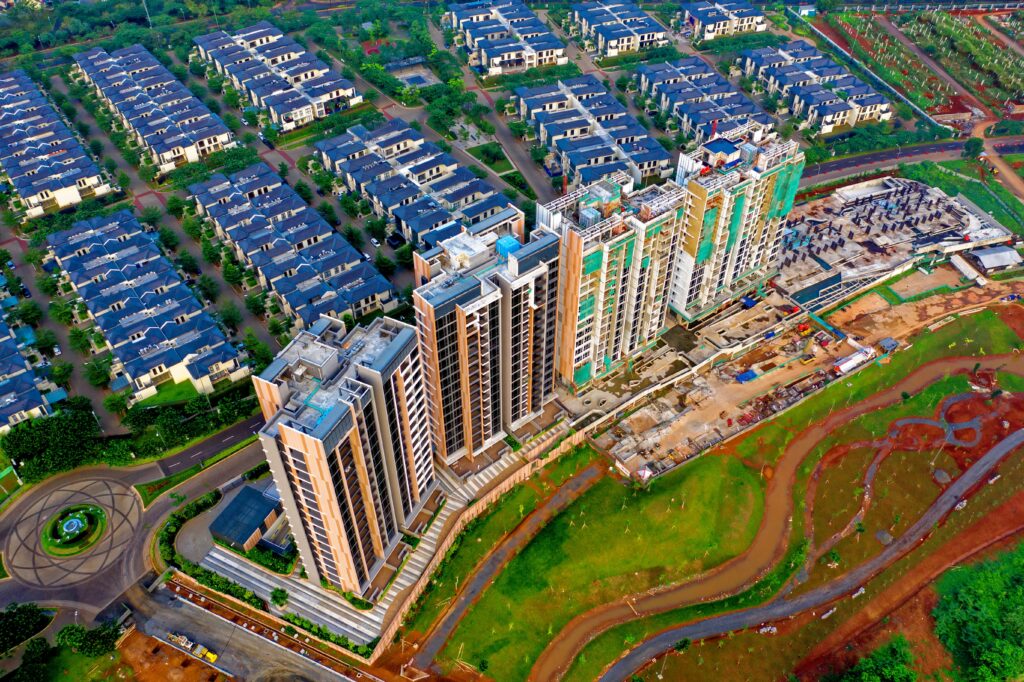
Integrated townships generally offer a broader range of lifestyle amenities. These may include clubhouses, landscaped gardens, sports facilities, children’s play areas, walking tracks, wellness zones, and community spaces. Standalone apartments usually offer fewer amenities due to space constraints. However, buyers who rarely use extensive recreational facilities may prefer a simpler residential setup. Long-term value often depends on whether amenities remain relevant, well-maintained, and genuinely useful to residents.
One of the strongest advantages of integrated townships is planned open space. Larger developments can allocate dedicated areas for landscaping, internal circulation, recreation, and community interaction. This can become increasingly valuable as urban density rises. Families with children, senior citizens, remote-working professionals, and wellness-conscious buyers may place greater importance on access to open spaces within their residential environment.
Integrated communities are often designed to reduce dependence on long daily travel for basic needs. Depending on the development, residents may benefit from nearby retail, recreational facilities, social spaces, and essential services. Standalone apartments rely more heavily on the surrounding neighbourhood. In a well-developed locality, this may not be a disadvantage. In fact, an apartment in an established area can offer immediate access to mature social infrastructure. The right choice therefore depends on both the project and its location.
Larger residential communities often provide multiple layers of security, such as controlled entry points, surveillance systems, visitor management, and dedicated security personnel. Standalone buildings may also provide effective security, but the scale and sophistication of systems can vary considerably. For many families, especially those with children or elderly residents, a well-managed residential environment can contribute to long-term desirability.
Long-term property value is closely connected to maintenance quality. Integrated townships may benefit from structured facility management because common areas, landscapes, amenities, and infrastructure require organised upkeep. However, larger amenity ecosystems can also mean higher maintenance charges. Standalone apartments may have lower maintenance requirements, but the quality of upkeep often depends heavily on the housing society, resident participation, and available budgets. Before buying, homebuyers should evaluate not only the current appearance of a project but also its long-term maintenance model.
There is no universal answer. Property appreciation depends on several factors, including:
An integrated township in a rapidly developing corridor may benefit from future infrastructure growth and increasing residential demand. Meanwhile, a standalone apartment in a prime, established neighbourhood may perform strongly because of limited land availability and location advantage.
This is why buyers should avoid judging a property only by project type.
For many families, integrated townships can offer greater lifestyle convenience because of open spaces, children’s areas, recreational amenities, security, and community interaction.
A well-planned environment can support different age groups within the same residential ecosystem. Children gain access to play areas, adults can use fitness and leisure spaces, and senior citizens may benefit from walking zones and community areas.
However, families that prioritise proximity to a specific school, workplace, or established neighbourhood may find a standalone apartment more practical.
Investors should focus on demand rather than labels. A large township is not automatically a better investment, just as a standalone apartment is not automatically less valuable. The strongest investment opportunities usually combine:
All the ongoing residential projects should compare location advantages, project planning, connectivity, configurations, and long-term neighbourhood development before making a decisionmore practical.
For buyers seeking a comprehensive lifestyle, larger open spaces, multiple amenities, structured community planning, and a self-contained residential environment, an integrated township may offer stronger long-term lifestyle value. For buyers prioritising a specific established location, simpler maintenance, or immediate access to existing neighbourhood infrastructure, a standalone apartment can be equally compelling. The better long-term investment is ultimately the property that combines the right location, credible development, strong connectivity, quality planning, and sustained buyer demand.
At Majestique Landmarks, the focus is on creating thoughtfully planned residential communities that respond to the evolving needs of modern homebuyers. Explore Majestique Landmarks projects in Pune to discover homes designed around connectivity, lifestyle, and long-term value.
1. Are integrated townships better than standalone apartments?
Integrated townships may offer more amenities, open spaces, security, and community infrastructure. However, standalone apartments can provide strong value when located in established and well-connected neighbourhoods.
2. Do integrated townships have better resale value?
They can attract strong resale demand when supported by good location, maintenance, connectivity, and developer credibility. Resale value is not guaranteed and depends on broader market conditions.
3. Are standalone apartments cheaper to maintain?
Often, yes. Smaller developments may have fewer amenities and common facilities, which can reduce maintenance requirements. Actual charges vary by project.
4. Which property type is better for families?
Integrated townships are often preferred by families seeking open spaces, recreation, security, and community living. The best choice still depends on commute, schools, budget, and location.
5. Which is better for long-term investment?
Neither format is universally better. Investors should evaluate location, infrastructure growth, demand, developer reputation, construction quality, maintenance, and future supply before investing